
Pool Problems? Let’s Figure It Out.

Common Summer Issues
Common Winter Issues
There are three possibilities regarding any water loss and they are as follows:
- there may be a problem with the return lines going from the filter back to the pool.
- there may be a problem with the suction lines from the skimmers to the filter.
- there may be a problem with your liner.
First, perform a Bucket Test to determine whether or not you are actually losing water, based on how much water you lose in a 24 hour period. ¼ to ½ an inch a day is normal, based on the temperatures and heat.
Bucket Test
- Make sure the pool is filled 1/2 way up the skimmers.
- Mark the water level on the liner with a piece of masking tape on which you’ve written the date.
- Fill a bucket about 1/2 way with water from the pool and place it on the top step at the shallow end.
- Mark the water level in the bucket with a piece of masking tape, also with the date.
- Wait 48 hours.
- Check any drops in the water levels for both the pool and the bucket.
So the premise is this: if the level in the bucket drops the same amount as in the pool (which is the ideal result), then your pool is evaporating water, as per normal. However, if the water in the pool drops, but there is NO drop in the bucket, you may have another issue that we’ll need to research further.
Of course, any rain introduced into your testing equipment (i.e. pool and bucket) will render your test invalid, and you will have to start the procedure over again.
If the Bucket Test determines that you are losing water, you will then want to determine where you are losing the water. A Pump-On/Pump-Off test can help you determine where the source of the water loss is.
Pump-On/Pump-Off Test
- Fill the pool up to normal operating level (½ to ¾ of the way up the skimmer openings).
- Take a ruler and measure from the top of the liner (where it fits into the track) down to the water level.
- Run the filter for 24 hours and measure again. Record exactly how much water was lost in 24 hours.
- Now, you turn the pump off for 24 hours.
- Take another measurement to see exactly how much water was lost with the pump off.
- If you lose more water with the pump ON: there may be a problem with the return lines going from the filter back to the pool.
If you lose more water with the pump OFF: there may be a problem with the suction lines from the skimmers to the filter.
If we determine either of the above two scenarios, we would suggest that you schedule a pressure test of the lines to determine exactly where the problem is.
If you lose the same amount of water regardless of whether the pump is ON OR OFF, then the problem is most likely in the liner. In this case, we would suggest that you schedule a diver to inspect the pool and repair any holes or tears in the liner.
Why does my filter run at a high filter pressure and has reduced water flow to the pool?
A dirty filter maybe the problem. When the filter pressure rises 8-10 PSI over the clean starting pressure, it is time to backwash or clean the filter. If there is algae in the pool, it maybe clogging the filter, keeping the pressure high. The filter cannot kill algae. Contact Excel Pool Service for proper chemical applications. If the filter pressure continues to run high with reduced water flow to the pool, the pump may be moving more water than the filter is designed to handle. Check the flow ratings of both the pump and filter to ensure they are sized correctly.
You may have a blocked or plugged return line. Contact Excel Pool Service.
Why is the filter continuing to run at high pressure even after backwashing?
Make sure you are following the instructions in your Hayward owner’s manual. The sand bed may be clogged with mineral deposits or other material that will not backwash away. Some calcium based chlorines and other alternative sanitizers could cause a build-up in your sand bed. You may need to change the sand.
Before you change the sand in you filter, try removing approximately 1” of the top layer of sand, and replace with the exact amount of sand removed. This sometimes rids the sand bed of the deposits clogging the filter.
You may have to clean you filter system with a special filter cleaner, contact Excel Pool Service for proper procedures.
Check to see if there is a closed or partially closed valve on the return piping.
Your pump may be too small to provide sufficient flow for proper back-washing. Your filter will filter properly, but if your pump does not supply at least 60% of the filter’s designed flow rate, you filter will never backwash completely. Refer to the label on you filter for flow rate requirements. It may be necessary to upgrade the pump or downgrade the filter.
Your pump may also be exceeding the maximum allowed flow rate of you filter causing excessive back-pressure. Check you Hayward filter owners guide or the operations label on you filter for the maximum allowed flow rate. You may have to downsize the impeller or pump to a lower horsepower or change the filter for one that will accommodate the pump’s flow rate. If allowed to continue, a pump that exceeds the recommended flow rate of a sand filter could cause the sand bed to channel (small channels in the sand that allow debris to pass unfiltered). This would cause debris to by-pass the filter.
Why is my pump noisy?
- The motor has an internal cooling fan that can be heard. When installing your pump, it is advised to carefully consider the location; under a bedroom window may not be an ideal location.
- Vibration from the pump’s feet and the base (where the pump rests) can cause the pump to be noisy. A piece of old carpet or rubber between the pump’s base and equipment pad might reduce the noise.
- Ensure the pump is level and the suction lines are not higher then the pump.
The bearing(s) might be noisy due to age or high concentrations of chemicals and heat. A leaky pump seal could damage the front motor bearing. It is very important to quickly repair any leaks around the pump to prevent extensive damage. It is recommended that you replace the bearings or the entire motor. Contact Excel Pool Service for repair. - Many times a noisy pump can come from cavitation. Cavitation has two possible causes, which are both hydraulically (water flow) related. The first is that the suction piping is undersized. If this pipe is undersized, the amount of water the pump requires to operate properly is reduced. Increasing the pipe size (increase water flow) or dropping the size of the impeller (decrease water flow) can quiet the pump. The second is that there is little or no backpressure on the pressure side of system (water feature pumps are a good example). Adding a valve or something to increase backpressure is advised.
For all of the above, it may be necessary to contact Excel Pool Service for assistance.
Why are there air bubbles flowing into the pool from the return fitting(s)?
If air is returning into the pool there might be a leak on the suction side of the pump. Check the following items that maybe causing air to enter the system: It may be necessary to contact Excel Pool Service for repair.
- The strainer cover and O-ring. Tighten if loose or replace gasket if damaged.
- Level of water in the pool is low causing water and air to mix into the skimmer..
- The skimmer weir may be stuck in the up position causing water and air to mix in the skimmer.
- Check the drain plugs on the pump strainer housing.
- Check all of the threaded fittings for leaks from improper sealants or sealing procedures.
- Check glued fittings for bad glue joints.
- Check all valves for possible leaks. Valve stem O-rings are a common suction leak point.
- Check and ensure the pump is not cavitating.
- Check pump housing for cracks.
Why won’t my pump fill with water (prime)?
- An air leak on the suction side of the pump.
- Check to make sure the suction line is free of obstructions.
- Check to make sure the impeller is still attached to the shaft of the motor. If the impeller has broken off, it will need to be replaced.
- If the pump is installed a distance from the pool or is elevated above the normal deck level, the time needed to prime the pump could be longer. For elevated installations, a check valve may be needed on the suction line to allow for easier priming.
Can I run my pump without water?
Hayward Pool pumps should never operate without water. The pump seal assembly in the pump volute (The area between the strainer basket and the pump motor) protects the pump motor from pool water. This seal assembly gets hot and is cooled by the pool water. If the pump is running without water, the seal will overheat and melt, If left running without water for a long period of time, the heat generated could damage the PVC pipe and other system components.
Do I need to keep grass, shrubs, and vegetation away from my motor?
Always keep the pool equipment clear and ensure that there is nothing growing over the motor. If insects are a large problem in your area, treat for insects. The air circulation around the motor is crucial for proper operation. Failure to ensure proper air circulation will reduce the life of the equipment.
.Pool Chemistry is the backbone of owning and caring for your pool. In order to keep yourself and your loved ones safe, you’ve got to do a little studying, and a little homework in order to get things right. Don’t worry! We’re here to help!
First, let’s start with the basics. Bring your water in to your local pool supply store for a water test at least every 2 weeks! There, they will run a variety of tests for you, and they will give you recommendations of what chemicals and what dosages you will need to add in order to balance your water to keep it safe and sanitary.
Your local pool supply store will need a fresh water sample (less than 1 hour old, in a noncontaminated container) and they will need to know the gallonage of your pool. Don’t know the gallonage of your pool? Check out our FAQ page for more info on that!
Here are the usual tests that are performed…
| Test Performed | Range |
| Free Chlorine / FAC (free, active chlorine) |
1 – 4 ppm |
| Total Chlorine / TAC (inactive/burnt off and active chlorine combined) |
*should match your FAC |
| pH (overall acidity of water) | 7.2 – 7.8 |
| Total Alkalinity (controls the pH) |
80 – 120 ppm |
| Calcium Hardness (aids in water clarity and protects your liner/equipment) |
200 – 400 ppm for chlorine pools 300 – 400 ppm for salt pools |
| Cyanuric Acid / CYA (protects chlorine from burning off) |
30 – 90 ppm for chlorine pools 60 – 90 ppm for salt pools |
| Phosphates (food source for algae, made from organic matter) |
*** as close to 0 as possible; otherwise, under 100 ppb *** |
| Total Dissolved Solids (TDS) | In a chlorine pool, you test for TDS, it should be under 1500 ppm |
| Salt | In a salt pool, it should range from 2800 – 3400 |
| Nitrates (inorganic compounds found in decaying matter) |
Should be 0 |
| Iron | 0 ppm |
| Copper | 0 ppm |
Correct sequence of adding chemicals when making adjustments, if/when necessary:
1) Shock 2) Alkalinity 3) pH 4) Calcium Hardness 5) Cyanuric Acid 6) Salt (only if applicable) 7)Phosphate Reducers & Enzyme blends
Alkalinity and pH:
Alkalinity controls your pH levels, and keeps them properly locked in place. Perfect Alkalinity is an 80. Safe/neutral pH is a 7… anywhere between 7.2 to 7.8 is preferred. Perfect pH is a 7.4. Anything under 7 is considered unsafe.
Your Alkalinity Increasing and pH Increasing/Decreasing chemicals can be added within the same day, just not at the same time. Please allow 4-6 hrs. between both types of products for your pool to properly filter the chemicals. *** Remember, even if the water is clear, you should still allow a minimum of 4 hours for the Alkalinity to filter before adding any pH increasers/decreasing agents. Pool Grade Alkalinity Increasers may be broadcast into the pool, preferably in front of returns that are located in your deep end, to help disperse chemicals more thoroughly. You should always dilute any pH increasers or decreasing agents into a large bucket. We recommend filling a 5-gallon bucket ½ – ¾ full and adding your dry chemicals to the bucket slowly. Completely mix the dry chemicals and water with a wooden spoon or wooden stirrer until completely dissolved, leaving no lumps. Once everything is completely dissolved, slowly walk around the edges of the pool, adding the mixture to the pool water, taking care to add the majority in front of the returns, and avoiding the skimmers, to disperse the chemicals more thoroughly. Disclaimer: It is safe to swim in your water 8 hours after any Alkalinity or pH changes
Calcium Hardness:
Calcium Hardness is often overlooked, but is a necessary addition. It “hardens the water” because soft water is generally classified as corrosive. It will not do any damage to you, so please do not panic, but in order to protect your plumbing, liner, and equipment throughout the season (since they are all under pressure with water constantly flowing through them), you will want your Calcium Hardness level to be a minimum of 200, with 300ppm being ideal.
*** Always add your Calcium Hardness agent a minimum of 24 hours after Alkalinity and pH products. Failing to do so might cloud your pool water excessively. ***
Calcium Hardness increasers usually generate heat when coming in contact with water, so please exercise caution when adding these chemicals to the water’s surface. It should always be broadcast into the pool slowly and never prediluted!!! Always follow the directions on the packaging, and never exceed chemical dosages from packaging so as to protect your liner, and so as to not over cloud your pool water.
Disclaimer: It is safe to swim in your water 8 hours after any Calcium Hardness increases.
Cyanuric Acid
Many brands offer liquid and a pelleted versions of Cyanuric Acid – otherwise known as CyA, Stabilizer, or Conditioner – all of which act as a “sunblock” for your chlorine, keeping it working and active. The ideal range for a chlorine pool is 30-90ppm, with 90ppm being on the high side.
Please remember that chlorine tabs often contain stabilizer which will add to this count throughout the season. For a salt pool, liquid CYA is safest for the salt cell and should be between 60 and 80 ppm to ensure your salt cell is not over working itself.
Cyanuric Acid should always be added a minimum of 24 hours after any Calcium Hardness products, with 48 hours being ideal, to ensure they do not cloud the water and work most efficiently. Though you will see that the pelleted version of Cyanuric acid may be more cost friendly than the premixed liquid, if you own a salt system, please do not risk it! The pelleted chemicals often times do not dissolve completely and can find themselves scaling prematurely, causing issues later on.
The pelleted or granular version of Cyanuric acid must be made into a slurry before being added to the skimmer. We recommend wearing goggles, and gloves, and using a skimmer sock, as well as a wooden spoon or stirrer, and a 5-gallon bucket. Follow the chemical dosing from the back of the packaging, and create a slurry using warm water. You may have to stir this mixture for upwards of one (1) hour before it is ready. Once you achieve a mainly liquid texture, you can then slowly, and carefully, pour the mixture into the skimmer that has been equipped with the skimmer sock.
Or, the easier and more recommended route would be to use the prediluted liquid Cyanuric acid. After obtaining a water test, and calculating how much you will need based on your gallonage, follow the directions on the packaging. Most packaging states you will need to shake the gallon for approximately one minute, then slowly add ½ gallon to the pool skimmer, while slowly walking around the edge of the pool and adding the rest of the gallon. Once the gallon is empty, fill the empty gallon with pool water, shake again, and empty out the contents to ensure you got all the product.
Disclaimer: It is safe to swim in your water 8 hours after any cyanuric acid increases
Phosphate Reducers and Enzyme Blends
Phosphates are organic compounds derived from phosphoric acid. They are present in a multitude of things, ranging from environmental attributes: leaves, pollen, grass, flowers, dirt, sand, rain water; to human based attributes: hair cells, skin cells, urine, fecal matter, hair products, detergents, sunblock, etc. Essentially, they are a food source for algae. They will not do you any harm, and you cannot even see them, however, it is essential to your pool that you remove them as much as you can. The best way to do this is through the use of enzyme blends.
For more information on Phosphate reducers and Enzyme blends visit our FAQ page!
Disclaimers: Any Phosphate Reducers or Enzyme blends should be added a minimum of 72 hours after any Cyanuric acid to ensure the live enzymes have the best chance to thrive. IT IS NOT RECOMMENDED TO SWIM FOR 24 HOURS AFTER ADDING LIVE ENZYMES TO POOL WATER. ALWAYS FOLLOW THE DIRECTIONS ON THE CHEMICAL PACKAGING, AND NEVER USE ANY CHEMICALS THAT MAY HAVE GOTTEN WET OR DAMAGED IN TRANSPORT!!!
It is very important to maintain proper water chemistry to protect not only your pool equipment, but your liner, your concrete, your handrails, and yourselves!
Mineral Sanitizers
Mineral sanitizers are an alternative form of sanitizer used in pools today. They use minerals such as copper and zinc to purify water in much the same way river rock does in lakes and streams. This type of system uses less chlorine than normally required because the minerals perform 90 percent of the sanitizing. You would still need chlorine or bromine as a “partner” sanitizer because the minerals only work when water flows through them. When the filter is off, the small amount of chlorine in the water continues the sanitizing started by the minerals, keeping your pool clean and clear.
Maintaining proper chemistry is as essential with mineral systems as it is for chlorine systems. King Technologies, makers of the FROG Mineral System, require that the chemistry be maintained as follows:
| Free Chlorine | 0.5 – 1 PPM |
| pH | 7.2 – 7.6 PPM |
| Total Alkalinity | 80 – 120 PPM |
| Calcium Hardness | 150 – 400 PPM |
| Cyanuric Acid | 30 – 50 PPM |
If the pH falls below range, you can adjust it by adding a pH increaser. Reversely, if the pH is too high, lower it with a pH reducer. Total Alkalinity is handled in much the same way, except you would use an alkalinity increaser to increase the alkalinity level. If the Calcium Hardness level falls low, add calcium hardness increaser (calcium chloride). If the Calcium level is too high, simply dilute it by draining some water and adding fresh water to replace it. It’s recommended that a copper based algaecide be used with this system as well. Copper based algaecides can last in the water for up to 3 months, continuously killing bacteria and algae.
Baquacil
Baquacil (or Revacil, if you’re nasty) is a non-chlorine alternative sanitizer. This sanitizer is peroxide based, using hydrogen peroxide to shock and activate the sanitizer. This is the same hydrogen peroxide that you would use to clean and disinfect wounds. This sanitizer is good at keeping an algae free pool due to the peroxide used. Simply maintain the sanitizer level between 30-50 PPM by testing and adding weekly doses of the sanitizer. To keep the sanitizer active and strong, monthly additions of hydrogen peroxide shock are required to keep a level of 50-100 PPM. Algaecide is added bi-weekly to help keep algae at bay.
Baquacil has become an expensive sanitizer system to maintain. It’s appeal has reduced as a result as well due to new and more viable technology, such as mineral and salt systems becoming introduced. As the technology for these systems improves, Baquacil is becoming a dying breed.
Persistent water loss
To prevent water loss, regularly inspect the liner for small tears. Keep the water chemistry balanced, as improper pH or chlorine levels can weaken the liner over time and lead to damage. Maintaining a consistent water level—especially during hot weather.
Strange Noises or Poor Circulation?
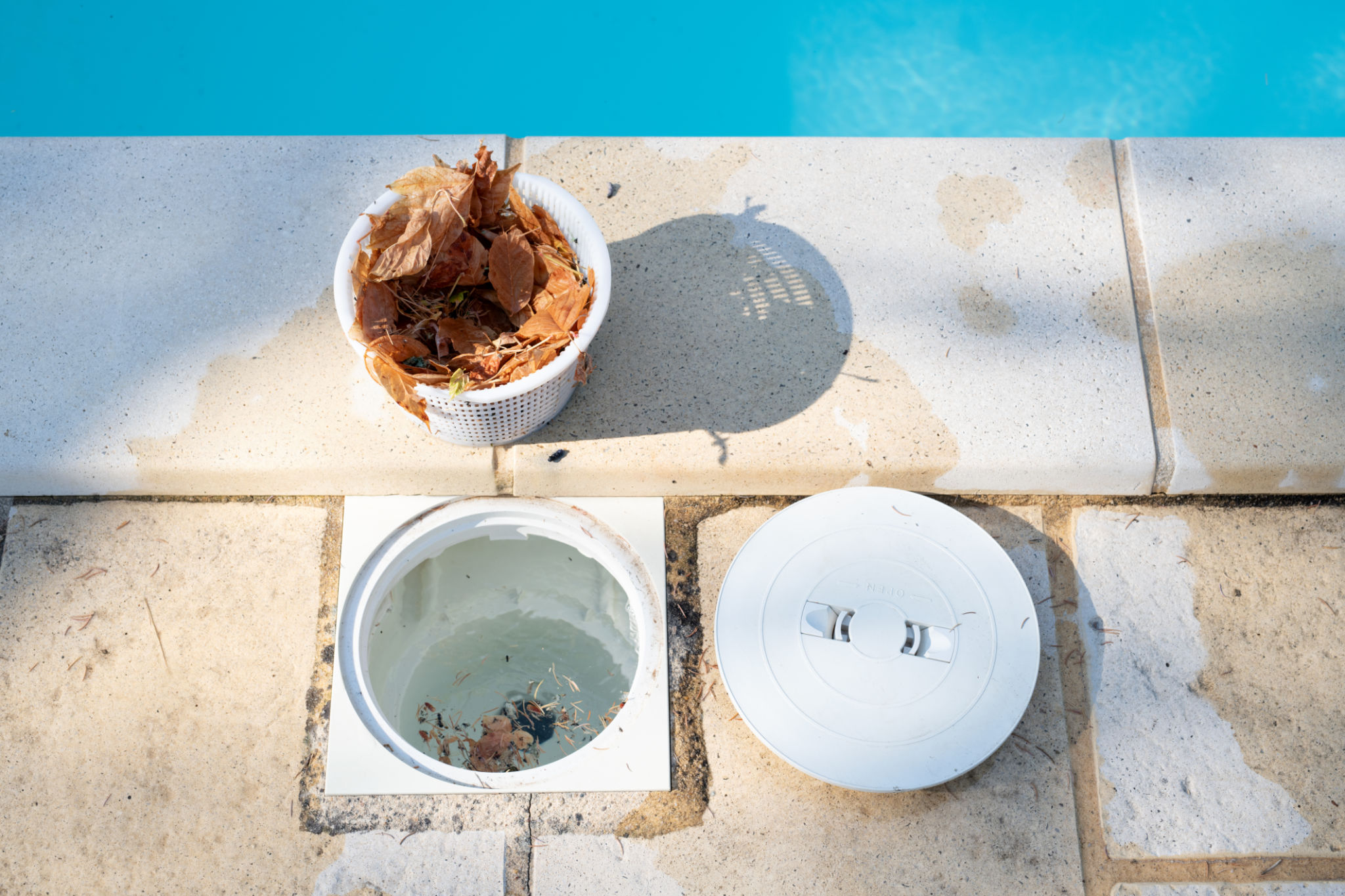
If your pump is making unusual noises or water flow is weaker than normal, check for clogged skimmer & pump baskets, or a dirty filter. Low water levels can also cause air to enter the system, reducing circulation and stressing the pump.
Equipment failures
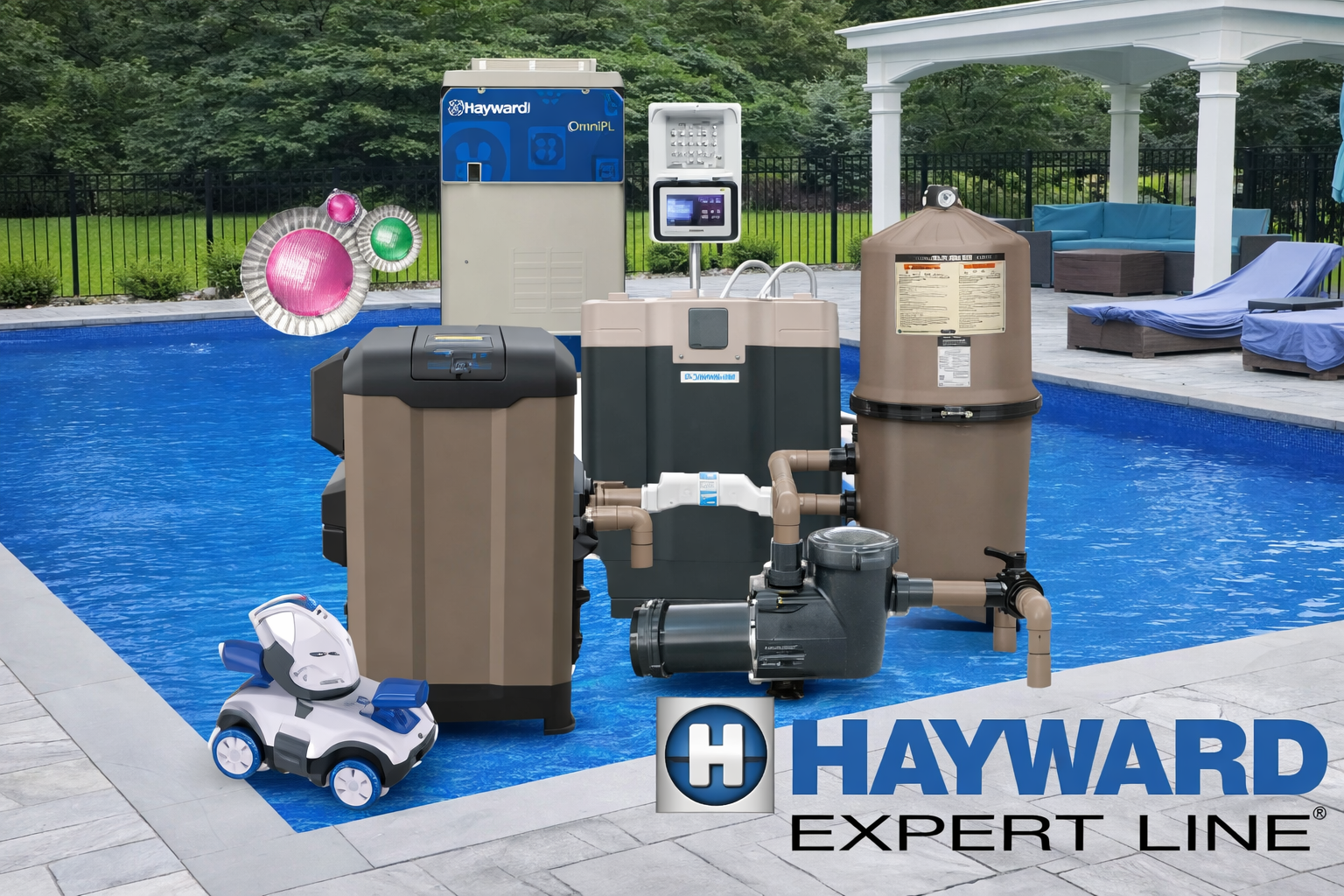
Keep your pool equipment clean & well-maintained by checking pumps, filters, heaters, & salt systems for wear or debris buildup. Maintain proper water chemistry. Unbalanced water can cause corrosion, scaling, and premature damage to internal components.
Not Sure What's Wrong? We Can Help!
Excel Pool Service
Howell , NJ 07731
Equipment
Heater & Heat Pumps
Filters
Pump Motor
Lights
Automation Sanitization
DHL
Services
Liner Replacements
Safety Covers
Warranty
Openings and Closings
Misc Services
Phone
(732) 905-1300
Admin@excelpoolservice.com
All Rights Reserved Copyright 2022 © Excel Pool Service, Inc.
Privacy Policy | Terms of Service | Cookie Policy | Acceptable Use Policy
Powered by Internet Business Solutions